
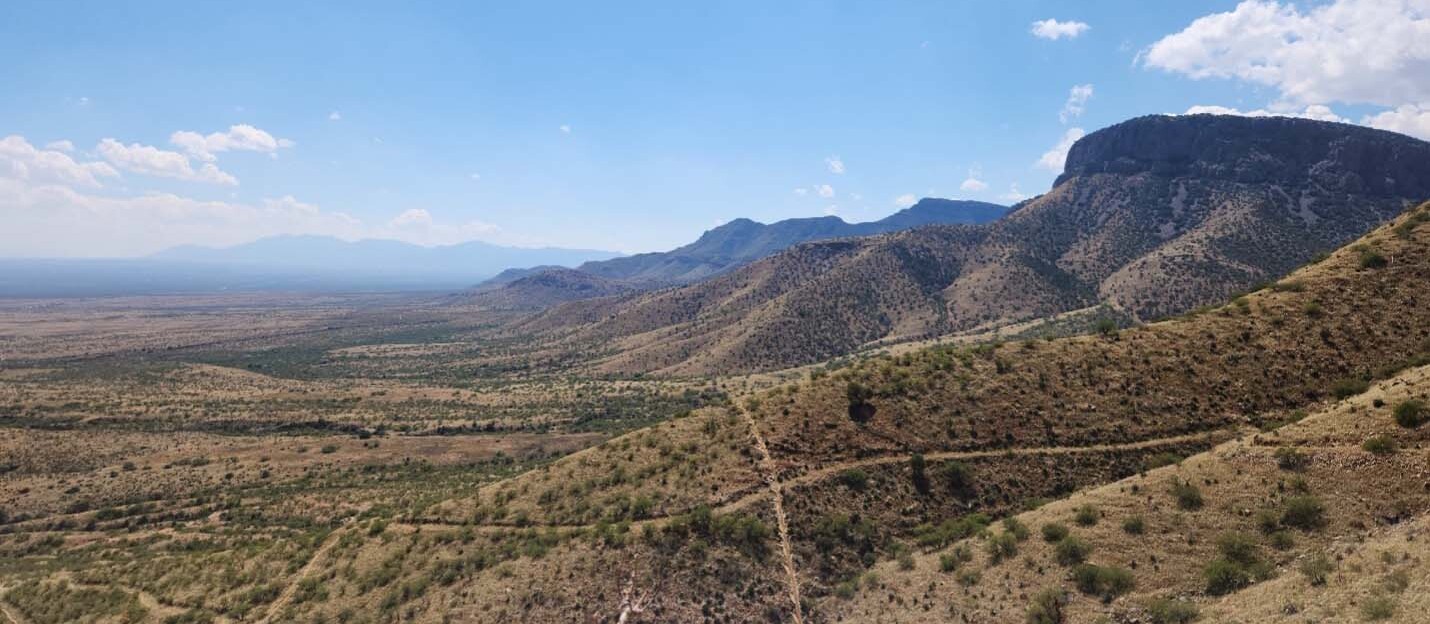
Road Rewilding Project Enters Next Phase
Road Rewilding Project Enters Next Phase

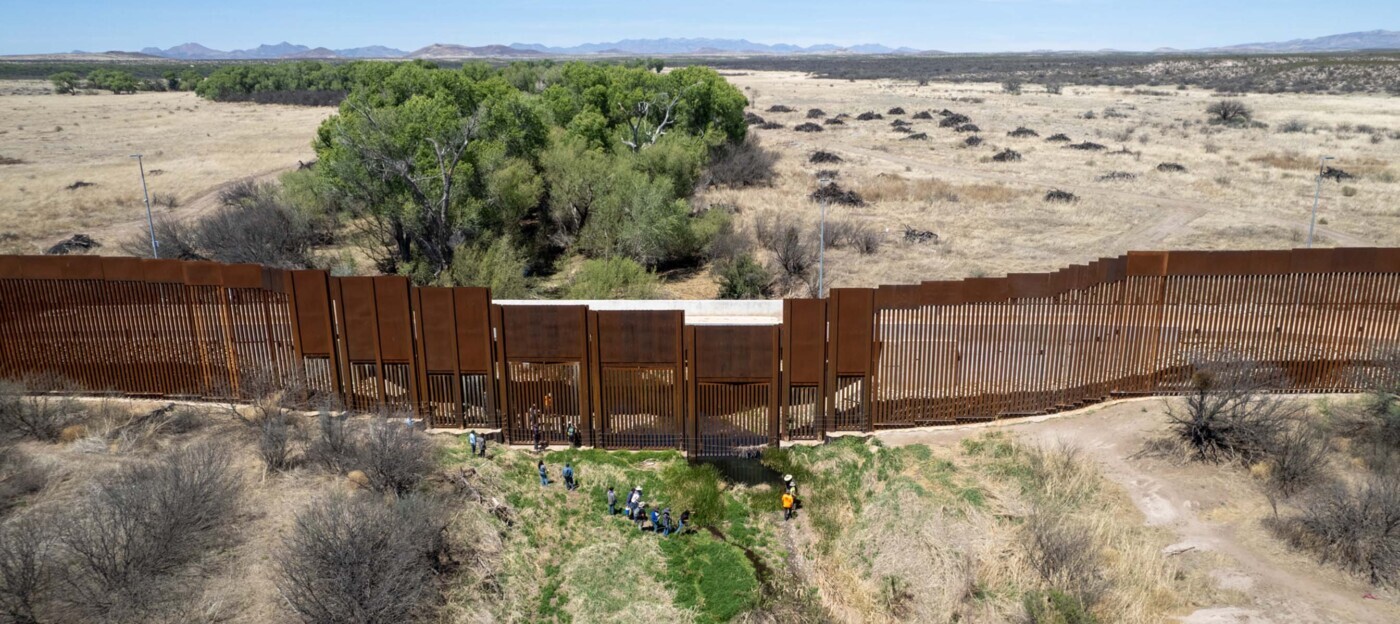
This May, Join Us for the Border BioBlitz
This May, Join Us for the Border BioBlitz
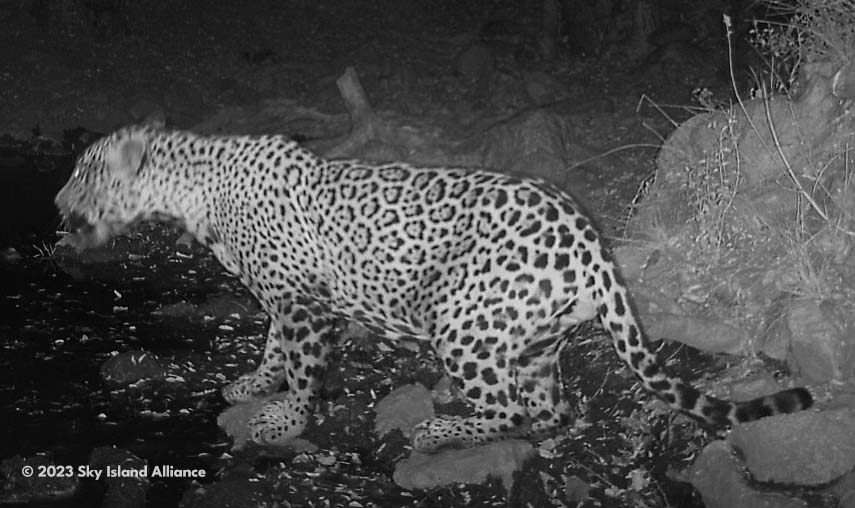
Jaguar Confirmed in Arizona's Whetstones
Jaguar Confirmed in Arizona's Whetstones
Shop the Sky Island Market
Shop the Sky Island Market
About Sky Island Alliance
Sky Island Alliance is a regional conservation nonprofit dedicated to protecting and restoring the diversity of life and lands in the Sky Islands of the U.S. and Mexico. The Sky Island region is comprised of 55 mountain ranges rising out of arid grasslands and desert that provide critical habitat for plants and wildlife. We’re working to ensure the Sky Islands are a place where nature thrives, open space and clean water are available to all, and people are connected to the region and its innate ability to enrich our lives.
Acerca de Sky Island Alliance
Sky Island Alliance es una organización regional de conservación sin fines de lucro dedicada a proteger y restaurar la diversidad de vida y tierras en las Islas del Cielo de EE. UU. y México. La región de las Islas del Cielo está compuesta por 55 cadenas montañosas que se elevan sobre pastizales áridos y desiertos que proporcionan un hábitat crítico para las plantas y la vida silvestre. Estamos trabajando para garantizar que las Islas del Cielo sean un lugar donde la naturaleza prospere, los espacios abiertos y el agua limpia estén disponibles para todos y las personas estén conectadas con la región y su capacidad innata para enriquecer nuestras vidas.
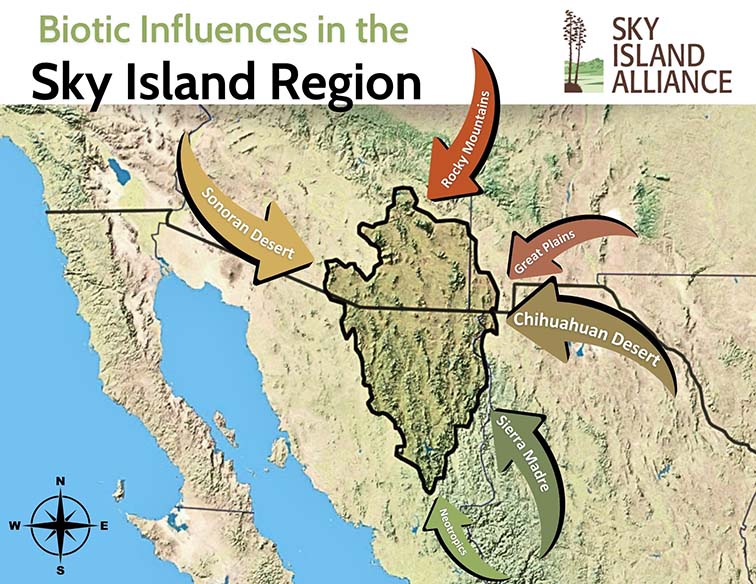
Sky Islands are isolated mountain ranges separated from other mountains by a vast distance and surrounded by lowlands of a dramatically different environment. This results in habitat “islands” such as a high-elevation forest surrounded by desert or grassland. In southern Arizona, part of New Mexico, and northern Sonora, six ecosystems blend to comprise the Sky Island region, supporting a wealth of biodiversity and many species found here and nowhere else.
¿Qué es una Isla del Cielo?
Las Islas del Cielo son sierras aisladas, separadas de otras sierras por una gran distancia y por las tierras bajas circundantes de un entorno dramáticamente diferente. Esto da como resultado “islas” de hábitat, como un bosque de gran altura rodeado de desierto o pradera. En el sur de Arizona, parte de Nuevo México y el norte de Sonora, seis ecosistemas se combinan para formar la región de las Islas del Cielo, sustentando una riqueza de biodiversidad y muchas especies que se encuentran aquí y en ningún otro lugar.